Thursday, June 27, 2013

NOW FULL! Memoir/ Fiction/ Travel Writing Masterclasses beginning 27 July 2013

There are still a few places left in my new series of six Memoir/ Fiction/ Travel Writing Masterclasses beginning 27 July 2013, so do contact me if you'd like to participate. It looks like a good group is shaping up, and there may also be a second set of masterclasses beginning 3 August 2013.

These workshops would be a chance for participants to work with me (and other members of a small workshop group of 6) over a sustained period (3 months) in the development of your writing towards a larger piece of work - e.g. a travel book, a memoir, a novel, a collection of stories.

The masterclasses feature indepth workshopping and detailed written editorial feedback from me each meeting, as well as a lesson focussing on an advanced writing skill (e.g. structure, transitions, point of view) and in-class writing exercises.

The masterclasses are for people who have previously attended writing workshops or classes, or have already published their writing, and therefore have some experience of writing craft. They are strictly limited to 6 participants to ensure that everyone has adequate time for discussion and feedback on their writing projects.

The emphasis is on supporting your writing, creating new work in a safe and nurturing environment, as well as learning to read as a writer and give constructive critical feedback on each other's writing. I find that deep learning and understanding can occur when people are engaged in other creative works, as much as their own. I also emphasize the rituals and practices of writing: it's practice, after all, that invites the muse to appear. And when we are working on a big project, we need to pace ourselves, with support and kindness, in order to carry the work the distance it needs to go. It's lonely and difficult working on one's own!

The meetings are fortnightly on Saturday afternoons and run for 5 hours (with a break and lots of cups of tea/coffee and snacks to keep us going!). They are somewhat intense but on the whole rewarding (as past participants have found - see comments below).


When:        6 fortnightly Saturday meetings, beginning 27 July 2013
Dates:        27 July, 10 & 24 August, 7 & 21 September, 5 October 2013
Time:         1.30 - 6.30pm (including  breaks)
Where:      Bronte 2024 or Randwick 2031 in Sydney 
Cost:          $1000
You will get: Six 5-hour workshops (30 class hours in total) and mentorship of you and your writing over the course of the masterclasses. Six detailed copy and structural edits/feedback on your writing from me (up to 2500 words to be submitted per class) - these edits alone would cost $400. A reader of course readings and writing craft notes, in-class writing exercises, presentation/ discussion of particular writing/ editing skills & techniques. Each meeting you will also receive verbal feedback and detailed discussion of your work from me and other members of the group. You will also get access to a safe space in which to test out your writing and exchange ideas and skills - a community of writers, engaged in a similar writing journey. Tea/ coffee/ snacks also provided.
Course covers: In-depth writing and editing skills for fiction (short stories or a novel) and creative non-fiction (memoir/ travel narratives/ personal essays, nature writing); generation of new material through writing exercises and reading/ discussion of  samples of particular craft skills; advice on writing craft and sustaining your writing life, as well as publication strategies; how to give and receive feedback/ criticism that is supportive and helpful to yourself and others as writers.
Application Process & Registration: Due to the small number of participants, there will be a selection process based on whether I consider I can be of assistance to you and your writing project; quality of work; and how the different projects in the group will resonate with each other. Selection will be based on a half page description of your project, as well as a two page example of your writing, which should be submitted to me by email ASAP.
Closing Date for Applications: 15 July 2013 (but as places are limited, it would be a good idea to send me your work ASAP)
Contact:     For more information, please contact Beth at: bywritingworks@gmail.com
Topics Covered:

Masterclass 1: Critiquing, Workshopping, Intent
Masterclass 2: Editing, Description, Scenes
Masterclass 3: Transitions in Place and Time, Show and Tell
Masterclass 4: Structure: Plot Shapes and Sequences
Masterclass 5: Foreshadowing and Subtext
Masterclass 6: Polishing, Publishing and Sustaining Your Writing Project/ Writing Life


SOME COMMENTS from past participants of Beth's Memoir/ Fiction Masterclasses 2010-2011:

Kate R: You are such a gifted teacher and editor, Beth, and my classes with you have opened up for me a new way of writing and thinking. You have helped me solve the impasse I'd come up against before beginning classes with you. This was, of course, the question of narrative voice. I feel I've found the voice of the book, and I really didn't expect it would take so short a time to do so, and I have you to thank. (2013)

Odette S: I liked being in a ‘safe space’ around other writers sharing our work, learning together, guided by a fabulous teacher; improvement in my craft; being inspired by the group; reading some amazingly good work (and even commenting on them!); being REQUIRED to write AND read (that discipline has long been overdue); ideas from the others’ work and the reading. I was given confidence that I ‘could do this’. The course exceeded my expectations. The tutor, teaching method and materials were excellent and the masterclass stoked my dream [of writing my story]. The course was very good value.
Elizabeth B: I think more than anything the course provided the discipline to keep going with my project… now I have a much clearer view of the structure of what I'm writing and how the content can evolve inside it. I knew that the tutor would be fabulous… (that was part of the inspiration for taking the course!) and the writing materials were excellent… I would absolutely recommend it to someone who has a project and is looking for support and feedback to help them along what is otherwise a pretty lonely road… the community it provides has been invaluable to me.
Karen W: I gained more confidence and trust in my work; practice at critiquing; an avenue which allowed experimentation and a response to it; consolidation of writing skills; a group I am excited about continuing to work with. [The course] fulfilled all my expectations, which I must add were very high. Beth inspired, challenged and encouraged her students. She created a supportive, respectful, ordered and safe environment. The material was highly relevant and interesting. I have already recommended this course to everyone who will listen.
Leanne M: I liked the detailed feedback... The range of input was helpful - the variety of perspectives was very valuable. Giving feedback also helped me to start to look at my own work more objectively. The discussions and exercises on different topics related to writing craft helped me to see some of what I need to do and an inkling of how to do it. I feel that I am well-equipped now to take my first draft to the next stage. That was my goal and it has been reached. The tutor was knowledgeable, friendly and kind, also encouraging and supportive. Firm when that was needed in terms of feedback/constructive criticism points. Teaching methods are very immersive and experiential and therefore effective. Materials - the handouts each session - are helpful and valuable references for the future… a good mix of inspiration, examples and practical guidance. I would recommend the course, but emphasise that each participant has to be prepared to work and give of themselves. It was so good I didn't want the series to end! Mind you I was exhausted - like a marathon runner perhaps. Thanks for a great course.
Angela R: I loved being part of a community of writers; hearing from Beth about the views and approaches of other writers in the world; being entrusted by others in the group to read and comment on their precious work; the warm, professional atmosphere; learning from Beth’s great bank of knowledge and her insights; Beth’s critiques, delivered always in a gentle, respectful, enquiring, and competent way. The course has strengthened my commitment to my project, given me more confidence, and forced me to meet a regular ‘deadline’ – otherwise it’s too easy to ease off, attend to other demands etc. etc. I’m still fending off that critic that tells me to be a more attentive friend, mother, blah blah, but the course has emboldened me to honour an early vision I had (i.e., as a child): to write novels.                                                 
Greg W: Just want to thank you for being such a fabulous writing teacher, and for selecting such a great class of writers. It was a privilege being involved. I have learnt so much. As mentioned, I need to digest all you have passed on to me, which will take several months. You have created a great learning environment, and opened 'the darkroom of my mind'. Thanks so much. [Greg is a photographer by profession.]

Friday, April 26, 2013

On Not Keeping A Notebook


I've been thinking lately how I've stopped keeping a regular journal (despite telling everyone it's imperative!) - how does it happen? You don't write one morning because you wake up too tired, or you have an early meeting, or a pile of papers to mark, or you forgot to put out the rubbish last night and now you have to run out and catch the garbage truck… and when you get back the moment has passed and your day of necessary tasks already begun. There are other reasons on day two and three, and then one day you find it's been weeks since you've written anything.

Joan Didion wrote in her essay "On Keeping A Notebook" that "It is a good idea, then, to keep in touch, and I suppose that keeping in touch is what notebooks are all about … keeping those lines open to ourselves".

She's talking about keeping "on nodding terms with the people we used to be, whether we find them attractive company or not. Otherwise, "she says, "they turn up unannounced and surprise us, come hammering on the mind’s door at 4 a.m. of a bad night and demand to know who deserted them, who betrayed them, who is going to make amends. We forget all too soon the things we thought we could never forget. We forget the loves and the betrayals alike, forget what we whispered and what we screamed, forget who we were".

But what if, like Nietzsche's dyspeptic, you'd rather not take note of those things, the things swallowed down from the past, and have them rise up to trouble your daily present? Nietzsche compared the “inability to forget” (that is, to actively engage in forgetfulness) to the man [sic] suffering from dyspepsia, always repeating on himself, trapped by the past, held in its constructions—which could lead to conditions of repression and self-division. A little "tabula rasa of the consciousness", he claimed, was necessary to a healthy constitution. A stern and fully-functioniong "porter at the door" of the mind, of memory.

Is my journal or notebook, then, where I "store" all those things (and events and grumbles and wishes and people, including several versions of me) that I haven't the time now to deal with because of my more urgent and necessary daily tasks? (Which, incidentally, seem to be growing - is that a sign of our times, or just me?)

When I look back at my old journals, I'm astounded by the obsessive attention to detail, the lists, the automatic recording of weather and names of cafes and coffeeshops I'd been writing in, the random description of strangers, the sad spiralling of doomed love affairs, the dizzy or ponderous working out of what I was thinking and feeling. I read them with interest - and sometimes sadness - it doesn't at all seem like me. Thank goodness. Maybe.

In the end, I think I fall on the side of Didion - better to keep on terms with who we used to be, and equally importantly, the times we used to live in, that slung and arrowed us then. Fortune turns, and we forget, and if we forget too well, we are doomed to the effects of tabula rasa - fifty first dates? (That's up there with my other top nightmare: being trapped in a dimly lit multi-storeyed car park, driving round and round unable to find either a park or an exit…)

You can shut your journal, put it in a box in the furthest corner under your desk. You can take a break from it - weeks or months of blank pages. But when you need it, it's good to be able to return. To make sure it's there, to hand - by that I mean this private space that's yours and yours alone, in which you conduct your practice of writing, your record-making and re-cording of the self. And you begin again.

To "record" comes from the Latin recorder, to "remember, call to mind," from re-"restore" re- ("back to the original place, again", also with a sense of "undoing") + cor (genitive cordis) "heart" (as the metaphoric seat of memory, cf. learn by heart). [Online Etymology Dictionary].

I like the thought of the heart as the seat of memory; and of recording as a kind of travelling back to an original place, the heart of something, and of that travelling as a kind of undoing. Unseating. Shaking something loose. But I also like the idea of confining that initial unseating and shaking within the pages of a journal - until, months or years or even decades later, I open it again.

Tuesday, February 19, 2013

MOVED FORWARD TO 2014: Writing Trek to Nepal

Dates To Be Announced (October 2014)


Remember that the Earlybird Discount expires at the end of February 2014!

Day 1: Kathmandu 
 
Arrive in Kathmandu. Transfer to hotel. Rest. You will be staying in the heart of the tourist area of bustling Kathmandu in an eco-guest house decorated in traditional style. Walk out the front door and into atmospheric Thamel, where you can shop for presents, or just soak up the atmosphere. There will be a brief orientation session and introductions.  

Day 2: Kathmandu
We will begin the day with our first workshop session, and preparations for the trek, followed by a tour of some of the famous Kathmandu World Heritage Sites.  There is so much to see in Kathmandu, and you won’t have time to see it all. However, Day 2 gives you a chance to whet your appetite and visit some of the sacred and world heritage sites; to look, take photos or write.

     Options include: 
  • Patan Durbar Square –world heritage site, with ancient temples and well laid out museum
  • Monkey Temple (Swayambhunath) or Boudhanath Stupa—two soaring Buddhist stupas, pilgrimage sites for Buddhists, especially the Tibetan Community
  • Pashupatinath Temple—world heritage site, one of the 4 top pilgrimage sites for Hindu Pilgrims around the world

Day 3: Kathmandu to Lukla to Phakdin
 
       In the early morning, step onto the twin otter plane at Kathmandu, and be transported as if in a time capsule to the village of Lukla in the Khumbu region (2827m). Here you will begin the acclimatization process and the first mountain session while you enjoy breakfast and plenty of hydrating liquids.

--> Even if your mind is still racing at city pace, your body will remind you that it is time to slow down –particularly when you find yourself puffing more than usual when climbing stairs, as you become aware of the first effects of the altitude.

After breakfast in Lukla and a recap on mountain safety, the trek begins with a 3 to 4 hour walk to Phakdin. Sometimes you will be sharing the trail with yak trains, other trekkers, and local traders on their way up to Namche Bazaar.  Such rich material for your photos, writing and memories. You will also get your first close up glimpses of the mountains, weather permitting. We will spend the night at a lodge situated in a valley right on the Dudh Koshi River. 


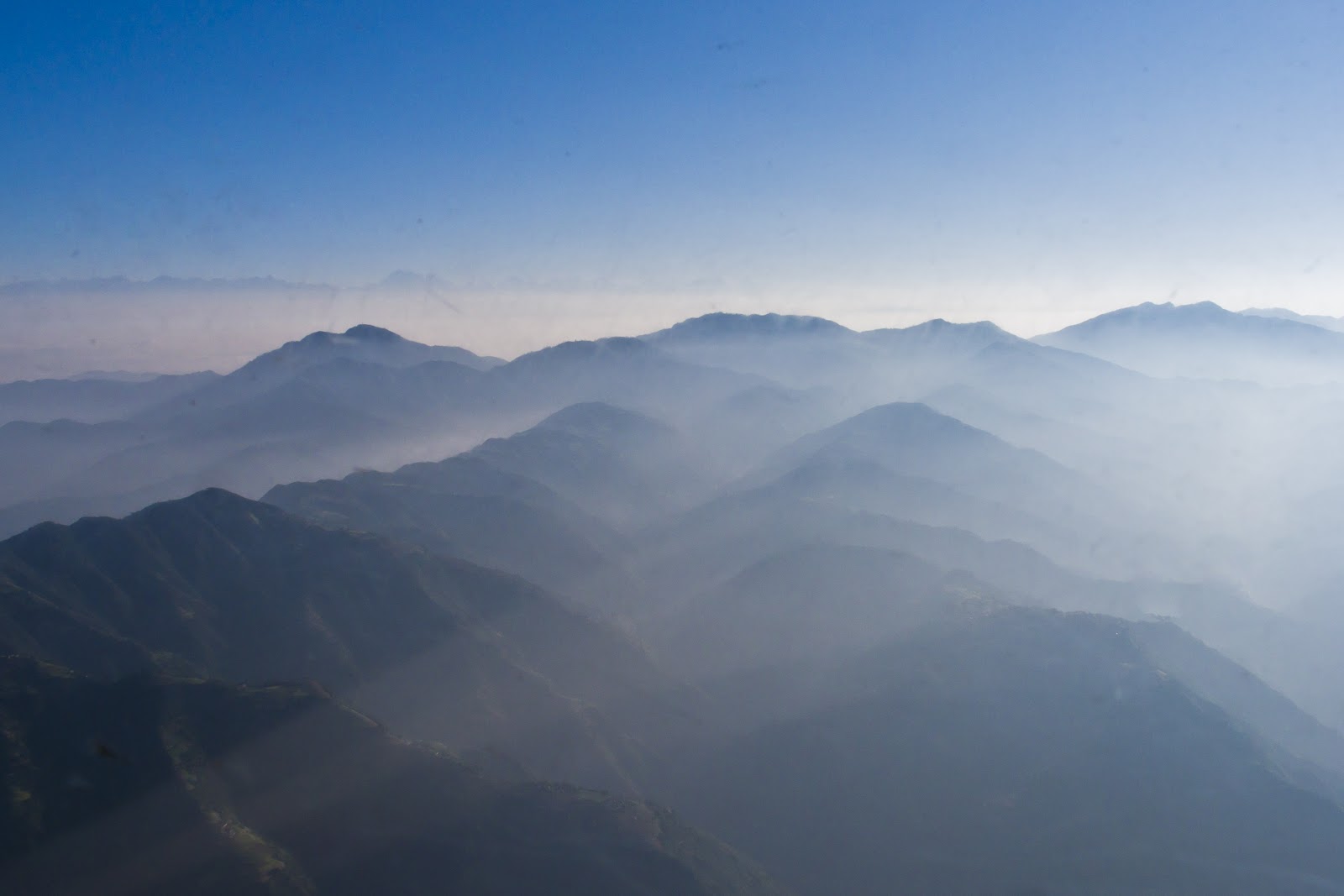
Please Note, Lukla’s weather is variable, and planes can’t land in the mist (when you get there you’ll see why). So be prepared for potential delays in the flight, sometimes even cancellations due to the weather.  This applies for the return journey from Lukla to Kathmandu also.


Day 4: Phakdin to Monjo
 
A couple of hours walk through lush vegetation, past agricultural fields and Buddhist monuments takes us to Monjo, a Sherpa village bordering Sagarmatha National Park. Opportunities for word pictures.  You’ll want to capture every blink of your eyes. 


Day 5: Monjo to Namche Bazaar

Namche Bazaar is situated approximately 3440 metres from sea level. At this point you will definitely start feeling the altitude, although most people acclimatise within a day or so.  Nestled at the top of a cliff, Namche is a traditional trading place, with traders coming from Tibet, India and Nepal to the small hill top village.  

When the clouds part, views of Mount Everest, and several other 8000m peaks are visible.

There is a steep climb into Namche Bazaar—and this section of the trip will be dependent on the health and fitness of our group.  The alternative will be day trips and writing sessions in and around Monjo and Phakdin

Day 6 - 9: Namche Bazaar activities

We spend 4 days in Namche Bazaar, with writing workshops every morning or afternoon. For those missing the comfort of home, there are bakeries with reasonable coffee and apple pie with a view—a legacy of early German climbers. 

There are three museums to explore—the main one covers culture/ geography/ flora and fauna of the Everest Region. Two smaller ones specialise in Sherpa Culture and Traditional Himalayan Medicine. 
 

There is also a traditional Tibetan Healer available for consultation at the Himalayan Healing Centre, a Tibetan monastery and the Tibetan market to explore. 
 
Day 10: Namche Bazaar to Phakdin


Day 11: Phakdin to Lukla

At Lukla we say goodbye to our ever- smiling porters, who head back to their villages while we catch our early flight back to Kathmandu.
Please remember, getting out of Lukla is dependant on weather. Sometimes it can take several days to fly out.

Day 12: Lukla to Kathmandu
After the mountain lodges, now you have the opportunity to be pampered at the majestic Hyatt Hotel.  This luxury five-star hotel overlooks Boudathnath Stupa—one of the largest Buddhist temples in Kathmandu.  At dawn and dusk, you can join the throngs of Tibetans encircling the stupa reciting their pujas. You may choose to have some additional pampering at the Hyatt’s day spa, such as a healing Ayurvedic massage.

 
The Hyatt provides a serene environment to continue our writing. 

Day 13: Kathmandu
The final full day in Nepal has some time for shopping, and optional sightseeing, and our last writing workshop and party/ evening reading of our work at the Hyatt.

a. Bhaktapur Durbar Square- World Heritage Site
b. Changu Narayan Temple- World Heritage Site
c. Shopping, relax around the Temple
d. Visit to orphanage

Day 14: Departure


Saturday, January 5, 2013

Writing Trek in the Himalayas: Cost and Inclusions


Earlybird Booking EXTENDED! 

Discounted Rate (book prior to 28 February 2014):
Writing Trek land only + full writing course (earlybird) = $US 4,350.00 (discount of $US 250.00)

Late Booking Rate (book after 28 February 2014):
Writing Trek land only + full writing course (late) = $US 4,600.00

We use highly qualified guides and reliable porters to carry our luggage for our trek and we pay them well to ensure they are not exploited.

In Kathmandu accommodation is comfortable, with Kantipur Temple House (eco friendly and traditionally built hotel) on arrival, and five star Hyatt at the end of the trip, arguably the best hotel in Nepal.

During the trek, we use clean and eco friendly lodges which have hot showers, attached bathroom, and hygienic food.

Email to request full itinerary with details of Writing Trek Inclusions and Exclusions.

Please Note: This is NOT a backpacker experience but for the traveller/ writer who delights in that little extra comfort after a day of challenge and creativity. 

CONTACT AND BOOKINGS:
To secure your place, a non-refundable deposit of US$550 per traveler is required.

“When we reconnect who we are with what we do,
we approach our lives and our work with renewed passion, commitment, and integrity.”
- P. Palmer

We look forward to welcoming you on this special expedition.

Sanjaya Tripathee
Managing Director,
Sacred Journeys Nepal Treks P. Ltd.
Kathmandu, Nepal
Email: sjnepal@wlink.com.np or sanjayatripathee@yahoo.com.au
Web: http://www.sacredjourneysnepal.com/
Mob: (0011) 977-9851112953

For Information:
Beth Yahp at bywritingworks@gmail.com

For Bookings:
Sanjaya Tripathee at Sacred Journeys Nepal sjnepal@wlink.com.np
or sanjayatripathee@yahoo.com.au

Thursday, July 12, 2012

Writing Trek in Nepal 2013 Itinerary

20 September - 3 October 2013
 

Sept 20 Kathmandu 
 
Arrive in Kathmandu. Transfer to hotel. Rest. You will be staying in the heart of the tourist area of bustling Kathmandu in an eco-guest house decorated in traditional style. Walk out the front door and into atmospheric Thamel, where you can shop for presents, or just soak up the atmosphere. There will be a brief orientation session and introductions.  

Sept 21 Kathmandu
We will begin the day with our first workshop session, and preparations for the trek, followed by a tour of some of the famous Kathmandu World Heritage Sites.  There is so much to see in Kathmandu, and you won’t have time to see it all. However, Day 2 gives you a chance to whet your appetite and visit some of the sacred and world heritage sites; to look, take photos or write.

         Options include: 
    • Patan Durbar Square –world heritage site, with ancient temples and well laid out museum
    • Monkey Temple (Swayambhunath) or Boudhanath Stupa—two soaring Buddhist stupas, pilgrimage sites for Buddhists, especially the Tibetan Community
    • Pashupatinath Temple—world heritage site, one of the 4 top pilgrimage sites for Hindu Pilgrims around the world

    Sept 22 Kathmandu to Lukla to Phakdin
     
           In the early morning, step onto the twin otter plane at Kathmandu, and be transported as if in a time capsule to the village of Lukla in the Khumbu region (2827m). Here you will begin the acclimatization process and the first mountain session while you enjoy breakfast and plenty of hydrating liquids.

    Even if your mind is still racing at city pace, your body will remind you that it is time to slow down –particularly when you find yourself puffing more than usual when climbing stairs, as you become aware of the first effects of the altitude.

    After breakfast in Lukla and a recap on mountain safety, the trek begins with a 3 to 4 hour walk to Phakdin. Sometimes you will be sharing the trail with yak trains, other trekkers, and local traders on their way up to Namche Bazaar.  Such rich material for your photos, writing and memories. You will also get your first close up glimpses of the mountains, weather permitting. We will spend the night at a lodge situated in a valley right on the Dudh Koshi River. 

    Please Note, Lukla’s weather is variable, and planes can’t land in the mist (when you get there you’ll see why). So be prepared for potential delays in the flight, sometimes even cancellations due to the weather.  This applies for the return journey from Lukla to Kathmandu also.


    Sept 23 Phakdin to Monjo
     
    A couple of hours walk through lush vegetation, past agricultural fields and Buddhist monuments takes us to Monjo, a Sherpa village bordering Sagarmatha National Park. Opportunities for word pictures.  You’ll want to capture every blink of your eyes. 


    Sept 24 Monjo to Namche Bazaar

    Namche Bazaar is situated approximately 3440 metres from sea level. At this point you will definitely start feeling the altitude, although most people acclimatise within a day or so.  Nestled at the top of a cliff, Namche is a traditional trading place, with traders coming from Tibet, India and Nepal to the small hill top village.  

    When the clouds part, views of Mount Everest, and several other 8000m peaks are visible.

    There is a steep climb into Namche Bazaar—and this section of the trip will be dependent on the health and fitness of our group.  The alternative will be day trips and writing sessions in and around Monjo and Phakdin

    Sept 25-28 Namche Bazaar activities

    We spend 4 days in Namche Bazaar, with writing workshops every morning or afternoon. For those missing the comfort of home, there are bakeries with reasonable coffee and apple pie with a view—a legacy of early German climbers. 

    There are three museums to explore—the main one covers culture/ geography/ flora and fauna of the Everest Region. Two smaller ones specialise in Sherpa Culture and Traditional Himalayan Medicine. 
     

    There is also a traditional Tibetan Healer available for consultation at the Himalayan Healing Centre, a Tibetan monastery and the Tibetan market to explore. 
     
    Sept 29 Namche Bazaar to Phakdin


    Sept 30 Phakdin to Lukla

    At Lukla we say goodbye to our ever- smiling porters, who head back to their villages while we catch our early flight back to Kathmandu.
    Please remember, getting out of Lukla is dependant on weather. Sometimes it can take several days to fly out.

    Oct 01 Lukla to Kathmandu
    After the mountain lodges, now you have the opportunity to be pampered at the majestic Hyatt Hotel.  This luxury five-star hotel overlooks Boudathnath Stupa—one of the largest Buddhist temples in Kathmandu.  At dawn and dusk, you can join the throngs of Tibetans encircling the stupa reciting their pujas. You may choose to have some additional pampering at the Hyatt’s day spa, such as a healing Ayurvedic massage.

     
    The Hyatt provides a serene environment to continue our writing. 

     Oct 02 Kathmandu
    The final full day in Nepal has some time for shopping, and optional sightseeing, and our last writing workshop and party/ evening reading of our work at the Hyatt.

    a. Bhaktapur Durbar Square- World Heritage Site
    b. Changu Narayan Temple- World Heritage Site
    c. Shopping, relax around the Temple
    d. Visit to orphanage

     Oct 03 Departure


    Wednesday, July 11, 2012

    ANNOUNCING: Writing Trek in Nepal 2013!

    20 September - 3 October 2013


    Our writing and trekking adventure in Nepal 2011 was such a success that Sacred Journeys Nepal and I are organising another in 2013.

    Based on feedback from participants we've added another night to the original itinerary (now 13 nights instead of 12, so we get an extra night up in Namche Bazaar), as well as a few changes to facillitate ease and enjoyment of the trek.

    See my 'What People Said' post for participants' comments—and hope to see you in Kathmandu next year!

    Here's more information:

    This unique journey of writing and inner development is for both experienced and amateur writers, located in one of the most extraordinary and beautiful regions on the planet. We explore Kathmandu, trek from Lukla to Namche Bazaar, then unwind back in Kathmandu, with writing workshops and insights all along the way.


    A full 12-session writing course, Writing Journeys: Creativity and Craft, specially designed and tutored by award-winning author Beth Yahp, makes this journey unlike any other. With years of experience as an innovative teacher of creative writing, Beth’s courses are both comprehensive and extremely popular.


    Whether your focus is fiction, travel or memoir, Beth is sure to free your storytelling capabilities with her inspiring and open-hearted writing workshops, and one-on-one or small group meetings to discuss your writing. Painters and photographers have also joined the trek and applied Beth’s teaching to their art.

    A creative and supportive atmosphere. The sharing of knowledge and writing skills. Time for reflection and remembering. Porters and guides to share our load.

    Most importantly, we will breathe. We’ll capture a new world with new eyes, and bring remembered ones alive on the page. We’ll have fun—as well as a sense of accomplishment—in writing and sharing our stories, imagination and memories.

    Accommodation from rustic traditional mountain lodges to the Hyatt in Kathmandu for rest and rejuvenation in the last days of the tour.

    NOTE: This is NOT a backpacker experience but for the trekker or stroller who delights in that little extra comfort after a day of challenge and creativity. Our aim is to walk, look, converse, and immerse ourselves in another way of being, with frequent stops along the way. Please also note that Nepal is a developing country, whose way of life and traditions can contrast with our own in insightful and energizing ways. “It gave me eyes,” as a Paul Theroux character might say.

    For more workshop details and an itinerary, please contact: Beth at bywritingworks@yahoo.com.au. For travel details please contact Sacred Journeys at sjnepal@wlink.com.np. or  sanjayatripathee@yahoo.com.au